
What Happens If a Crypto Casino Goes Bankrupt? Are Your Funds Safe?

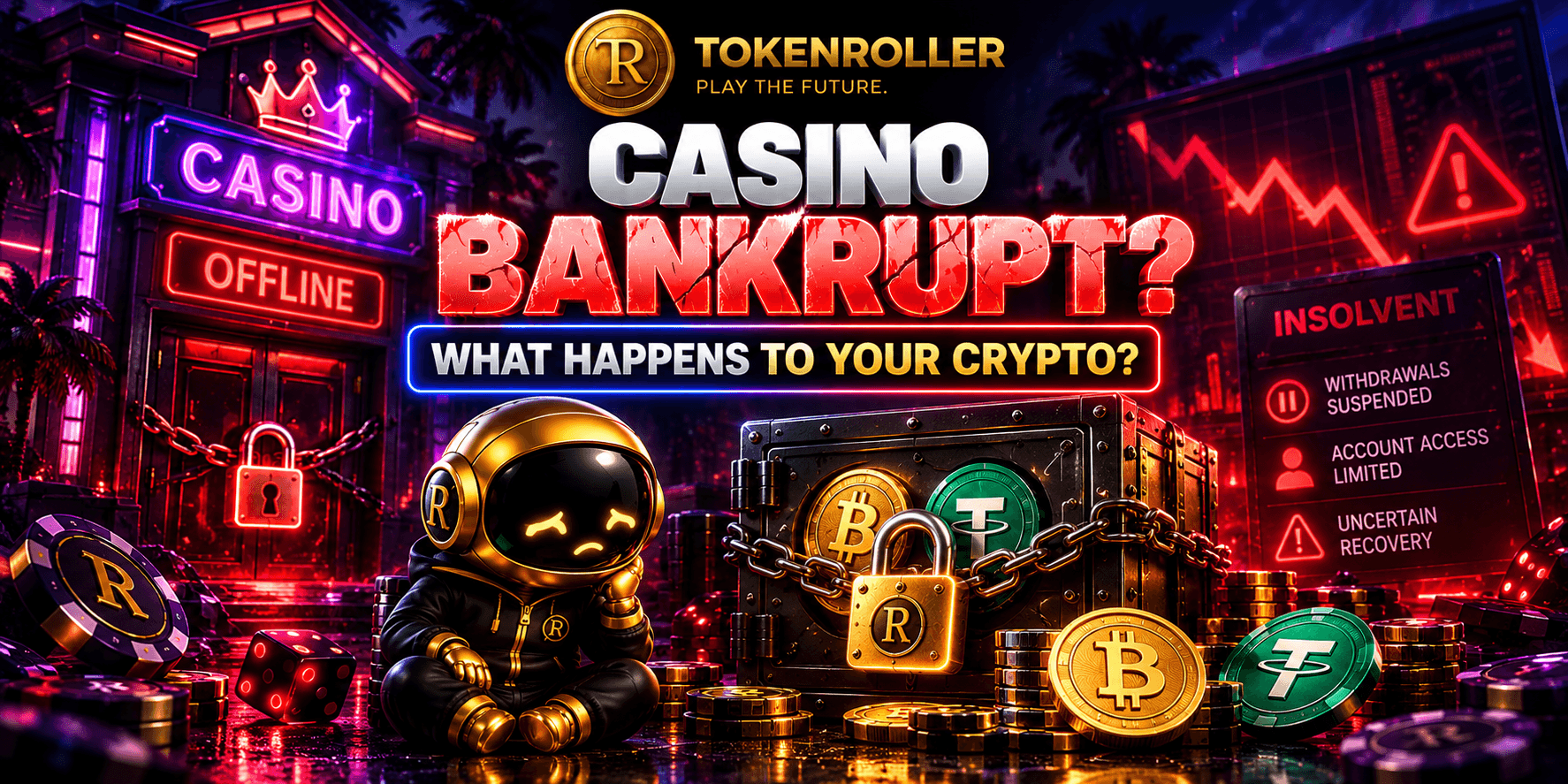
Cryptocurrency has changed the way people deposit and withdraw money at online casinos, offering faster transfers, global accessibility and greater flexibility compared with many traditional payment methods. But while players often pay close attention to bonuses, withdrawal speeds and game selection, there's another question that deserves just as much consideration: what happens to your cryptocurrency if the casino holding it suddenly goes out of business?
It's an uncomfortable possibility, particularly when a casino appears successful, processes withdrawals normally and displays substantial balances in Bitcoin, Ethereum or stablecoins. Yet the cryptocurrency shown in your casino account isn't necessarily held in a dedicated wallet reserved exclusively for you. Depending on the operator's structure, those funds may be managed alongside other customer deposits, operational reserves or assets held by third-party payment providers.
If the business becomes insolvent, the distinction between owning cryptocurrency in your personal wallet and having a claim against a casino can become extremely important. Blockchain technology may make transactions transparent, but it doesn't automatically protect customers from a company's financial failure.
Your Casino Balance Isn't the Same as Your Personal Wallet
When you deposit cryptocurrency into a typical custodial crypto casino, you're transferring assets to an address controlled by the operator or its payment infrastructure. Once the blockchain transaction is confirmed, the casino credits your account through its internal accounting system, allowing you to place bets and receive winnings without recording every individual wager on-chain.
That arrangement is convenient, but it also changes who controls the funds. While cryptocurrency in a self-custody wallet can be transferred using private keys you control, a casino balance generally depends on the operator approving and processing your withdrawal request. The number displayed beside your username represents an account entitlement governed by the platform's terms, rather than necessarily identifying a specific collection of coins stored separately in your name.
This distinction matters enormously during financial difficulties. If a casino experiences a serious liquidity shortage or enters insolvency proceedings, players may discover that their balances are not immediately accessible, even though the amounts remain visible in their accounts. Whether customers have ownership rights over particular assets or instead hold contractual claims against the operator depends on the custody arrangements, applicable law and the casino's legal structure.
A confirmed crypto deposit proves that funds were transferred. It doesn't guarantee that those funds will remain available for withdrawal if the operator fails.
What Actually Happens When a Crypto Casino Becomes Insolvent?
A casino becomes insolvent when it can no longer meet its financial obligations as they fall due or when its liabilities exceed its assets, depending on the applicable legal definition. This doesn't always mean the business immediately disappears. Some operators may attempt restructuring, seek additional financing or enter formal proceedings designed to manage outstanding debts and distribute remaining assets.
For players, however, the immediate consequences can be serious. Withdrawals may be suspended while the operator assesses its financial position, and access to account balances can become uncertain. Even if the casino maintains functioning servers and displays player balances, that doesn't necessarily mean it has sufficient liquid assets to satisfy every withdrawal request.
If formal insolvency proceedings begin, customers may need to establish their claims through an administrator, liquidator or another legally recognized process. Their position can depend on whether customer funds were segregated, whether they are legally protected under the relevant jurisdiction and how the operator's obligations are classified.
In some circumstances, players may be treated as unsecured creditors, meaning they must compete with other creditors for whatever assets remain after higher-priority claims have been addressed. Recovering the full balance is not guaranteed, and the process can take considerable time. Other legal arrangements may offer stronger protections, but those protections should never be assumed simply because the platform accepts cryptocurrency.
Are Player Funds Kept Separate From Casino Money?
One of the most important questions surrounding casino insolvency is whether customer funds are segregated from the operator's own assets.
Some gambling businesses operate under rules or arrangements that require particular forms of customer-fund protection. Others may maintain separate accounts or custody structures voluntarily. However, the existence and strength of these protections vary considerably between jurisdictions and operators, and a separate wallet or account doesn't automatically establish that customers have enforceable ownership rights over the assets inside it.
This is particularly relevant for crypto casinos because blockchain addresses can create an impression of separation that doesn't necessarily reflect the underlying legal position. An operator might maintain multiple wallets for deposits, withdrawals and treasury management without providing legally protected segregation of player balances.
Players should therefore look beyond general statements such as "secure funds" or "protected wallets." The more meaningful questions concern how customer balances are held, whether the casino describes any segregation arrangements and what happens to those assets if the company becomes insolvent.
Unfortunately, many operators provide limited public information about these matters, making it difficult for ordinary players to independently evaluate their financial resilience.
Can Blockchain Transparency or Proof of Reserves Protect Players?
Blockchain transparency is valuable, but its limitations become particularly apparent when discussing insolvency.
Because many cryptocurrency networks maintain publicly accessible transaction records, it's possible to inspect wallet balances and track transfers between addresses. Some crypto businesses also publish Proof of Reserves information intended to demonstrate that they control certain digital assets.
These mechanisms can provide useful evidence, but seeing cryptocurrency in a wallet doesn't automatically prove that a casino has enough assets to cover all customer balances and other financial obligations.
An operator might control substantial cryptocurrency reserves while also carrying liabilities that aren't visible on-chain. Funds could be borrowed, pledged, subject to other claims or held under arrangements that aren't apparent from a blockchain explorer. Even a reserve attestation covering customer balances at a particular moment may not demonstrate the company's complete financial position or establish customers' legal rights during insolvency.
For Proof of Reserves to provide meaningful reassurance, players would need confidence not only in the assets being reported but also in the completeness of the corresponding liabilities and the reliability of the verification process.
Blockchain technology can help make certain information independently verifiable. It cannot, by itself, establish that a casino is solvent or that customers will recover their balances if the business fails.
Bankruptcy and Exit Scams Are Not the Same Thing
When a crypto casino suddenly stops processing withdrawals or disappears from the internet, players may understandably assume that the operator has deliberately stolen their money. While fraudulent shutdowns do occur in the wider cryptocurrency ecosystem, it's important to distinguish between genuine business failure and an intentional exit scam.
A legitimate insolvency can result from poor financial management, unexpected liabilities, operational losses or other business problems. The operator may still be subject to legal proceedings, regulatory oversight or formal efforts to distribute remaining assets.
An exit scam, by contrast, involves deliberate deception, typically with operators abandoning the platform or misappropriating customer funds. In these situations, reliable information about the business, its owners and the location of remaining assets may be extremely difficult to obtain.
From the player's perspective, the immediate experience can look similar: withdrawals stop, support becomes unresponsive and account balances remain inaccessible. But the underlying causes and possible recovery options can differ substantially.
This is another reason why transparent ownership information, credible licensing claims and clear operating terms matter when evaluating crypto casinos. They don't eliminate financial risk, but they can make it easier to understand who is responsible when something goes wrong.
Warning Signs That a Crypto Casino May Be in Trouble
Financial difficulties aren't always visible to customers before a casino fails, and even well-established businesses can experience unexpected problems. Nevertheless, certain patterns deserve attention, particularly when several appear together.
Repeated withdrawal delays without convincing explanations can be an early concern, especially when previously reliable payments become increasingly unpredictable. Sudden changes to withdrawal limits, unusually restrictive account reviews, persistent technical problems or a noticeable deterioration in customer support may also justify additional caution.
Aggressive promotional offers aren't automatically evidence of financial distress, but unusually generous incentives combined with worsening withdrawal performance can raise questions about the operator's priorities and liquidity.
None of these indicators proves that bankruptcy is approaching. Technical outages, compliance reviews and temporary payment disruptions can occur at otherwise legitimate businesses. What matters is whether the operator communicates clearly, applies its published policies consistently and resolves problems within a reasonable process.
A casino that becomes increasingly opaque while customers struggle to withdraw their balances deserves careful scrutiny, regardless of how attractive its bonuses or games may appear.
What Can Players Do If a Casino Shuts Down?
If a crypto casino unexpectedly closes or suspends withdrawals, preserving accurate records is an important first step. Transaction hashes, deposit confirmations, withdrawal requests, account balances, relevant terms and customer-support correspondence may all help establish what happened and what funds are owed.
Players should also investigate whether the operator has announced formal insolvency proceedings or whether a legitimate regulatory authority, administrator or liquidator has provided instructions for affected customers. Where an official claims process exists, following its requirements and deadlines may be necessary to preserve potential recovery rights.
It's equally important to be cautious of third parties promising guaranteed recovery in exchange for upfront payments. People who have already lost access to cryptocurrency can become targets for additional fraud, particularly when supposed recovery agents claim they can unlock funds through special blockchain procedures.
The availability of legal remedies depends heavily on the operator's jurisdiction, corporate structure and contractual arrangements. Some customers may have avenues for filing claims or complaints, while others may face significant practical obstacles.
There is no universal blockchain mechanism that can reverse a completed deposit simply because the receiving casino subsequently becomes insolvent.
How to Reduce Your Exposure Before Depositing
The most practical approach is to treat a casino balance as money held with a third-party gambling operator rather than as a substitute for a personal cryptocurrency wallet.
Before depositing, examine the casino's reputation, withdrawal policies, licensing information and any available explanation of how player funds are managed. A long operating history and positive customer experiences can provide useful context, although neither guarantees future solvency.
Maintaining only the amount intended for gambling can also reduce unnecessary exposure. Large unused balances generally have little reason to remain on a custodial casino platform when the player isn't actively using them. Withdrawing eligible funds to a wallet under your control reduces reliance on the operator for continued custody, although ordinary blockchain and wallet-security risks still apply.
Ultimately, the goal isn't to predict which casino might fail. It's to recognize that financial risk continues after a cryptocurrency deposit is confirmed, even when the games themselves operate fairly and withdrawals have historically been reliable.
Final Thoughts
A crypto casino going bankrupt can leave players facing frozen balances, uncertain recovery prospects and complicated legal questions about who owns the assets held by the platform. Whether customer funds are protected depends on the operator's custody arrangements, financial position, contractual terms and applicable legal framework.
Blockchain transparency can help verify transactions and certain reserves, but it doesn't automatically guarantee solvency, enforce withdrawal obligations or protect players from losses during insolvency.
The distinction between self-custody and casino custody therefore remains essential. Cryptocurrency stored in a wallet you control is fundamentally different from a balance maintained by an online gambling operator.
Crypto makes moving money easier. It doesn't make the company holding that money immune to financial failure.
Understanding that difference is one of the most important steps toward making informed decisions about where and how long you keep your cryptocurrency.